What Is Google AI Mode?
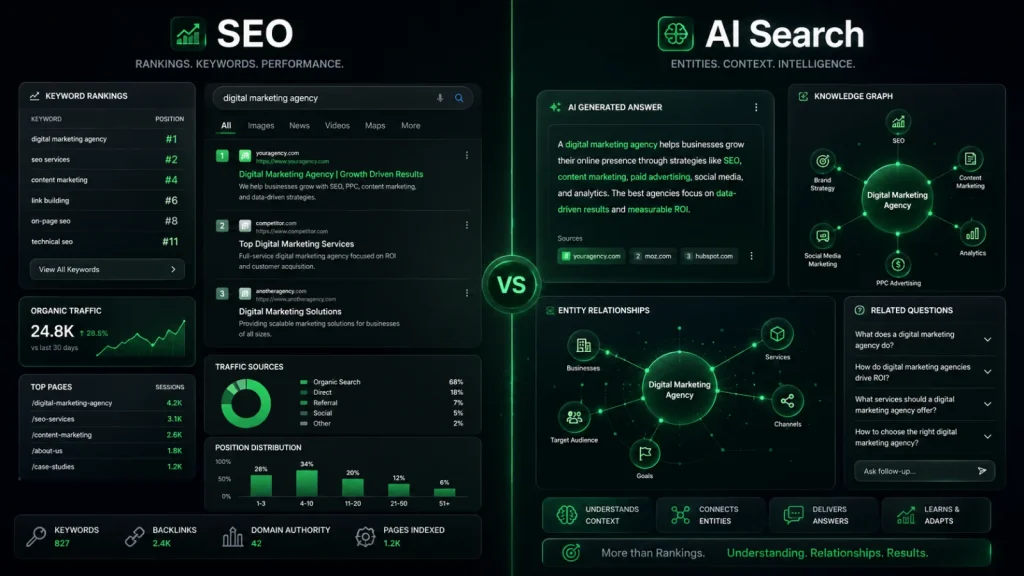
Why Traditional SEO Alone Is Not Enough
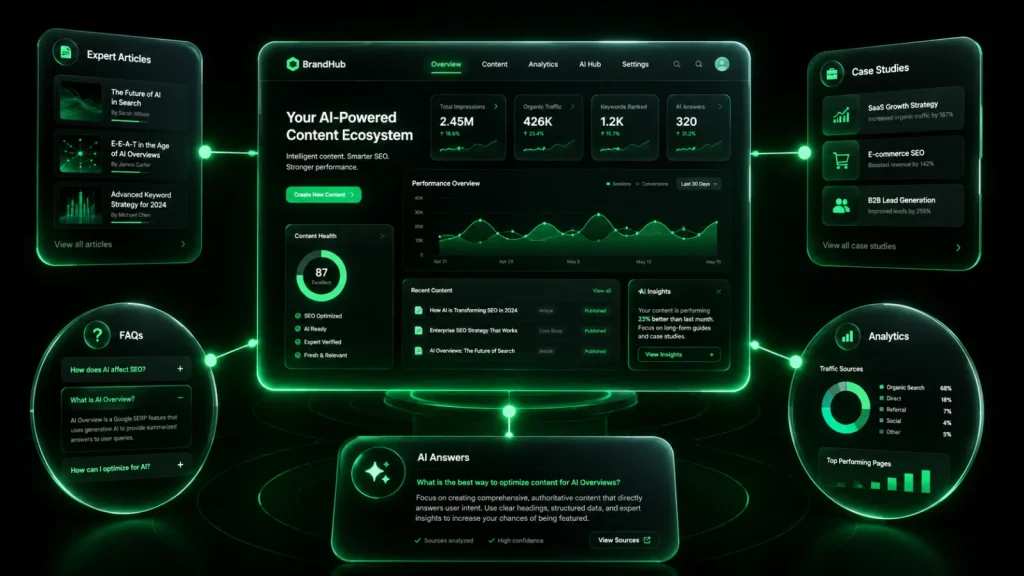
- add keywords;
- write several blog posts;
- optimize meta titles;
- add a few backlinks;
- publish generic FAQ sections;
- wait for rankings to grow.
What Businesses Need to Understand About AI Search
AI Search does not remove the need for a website. It increases the importance of having a strong one. Your website is now more than a digital brochure. It is a source of information for customers, search engines and AI systems. If the website is poorly structured, vague or outdated, it becomes harder for both users and machines to understand why your business should be trusted.AI Search rewards clarity
Pages that clearly explain a topic, answer real questions and provide useful context are easier to extract and summarize.AI Search rewards structure
Headings, lists, FAQs, definitions, comparisons and clear sections help AI systems understand the content faster.AI Search rewards authority
Businesses that publish expert insights, case studies, methodology and practical recommendations have a stronger foundation than businesses that only publish promotional text.AI Search rewards usefulness
Content should help the user make a better decision. If an article does not answer a real question, it is unlikely to become valuable for search or AI systems.What Is GEO and How Is It Different From SEO?
GEO stands for Generative Engine Optimization. It means preparing your content and digital presence for AI-powered search engines and generative answer systems. SEO focuses on helping a website perform better in search engines. GEO expands this logic for AI-generated answers. In practice, GEO includes:- clear explanations of important topics;
- expert content written for real questions;
- structured articles with strong headings;
- FAQ sections that answer specific user intent;
- entity-rich content that connects related concepts;
- internal linking between services, cases and insights;
- trust signals such as author, company, process and proof;
- content that can be easily summarized by AI systems.
How to Prepare Your Website for Google AI Mode and AI Search
1. Build content around real business questions
AI-ready content starts with the questions your customers actually ask. For example, a weak article topic would be: “Our digital marketing services.” A stronger topic would be: “Why your website gets traffic but does not generate leads: 9 signs your digital system is broken.” The second topic is more useful because it speaks to a real business problem. It can attract search traffic, answer AI Search queries and move a potential client closer to a decision.2. Use clear headings and logical structure
Every article should be easy to scan. Use H2 and H3 headings to separate ideas. Avoid large walls of text. Include lists, examples and diagnostic questions. Good structure helps users read faster and helps AI systems understand the content more accurately.3. Add expert perspective
Generic content is easy to ignore. Expert content explains how to think, what to check and what to do next. Instead of writing only “SEO is important,” explain why SEO is changing, what businesses usually get wrong and how to build a better system. This is where a company can show its real expertise.4. Connect content with services
A blog article should not exist separately from the rest of the website. It should connect naturally to service pages, contact pages, case studies and business goals. For example, an article about AI Search should link to pages about SEO, website development, analytics, content strategy or digital growth services. This improves internal navigation and helps both users and search engines understand the website’s expertise.5. Optimize images properly
Images should not only look good. They should also support the meaning of the article. Each image should have:- descriptive file name;
- clear alt text;
- relevant title;
- caption where useful;
- compressed format;
- correct size for web performance.
6. Add FAQ sections
FAQ sections are useful because they answer direct questions. They make the article easier to scan and help search engines understand user intent. For AI Search, FAQs can also provide clear answer blocks that are easier to extract, summarize and reuse in generated responses.7. Track performance after publishing
Publishing is only the beginning. Businesses should track how content performs over time. Important indicators include:- organic impressions;
- clicks from Google Search;
- ranking growth for target topics;
- engagement on article pages;
- internal link clicks;
- lead generation from content;
- brand search growth;
- visibility in AI-generated answers where possible.
Diagnostic Questions for Business Owners and CMOs
Before investing more money into SEO or paid traffic, ask these questions:- Does our website clearly explain what we do and who we help?
- Do our articles answer real customer questions?
- Do we have expert content or only service descriptions?
- Can AI systems easily understand our business expertise?
- Do our pages have clear headings, FAQs and internal links?
- Are our images optimized with meaningful alt text?
- Do we connect SEO content with lead generation?
- Do we measure content performance beyond traffic?
What MOVEON Recommends
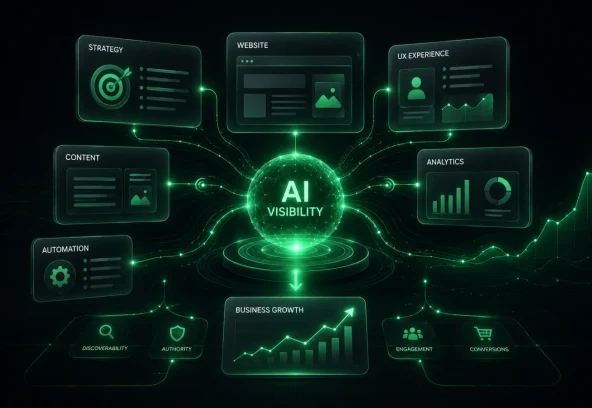
At MOVEON Digital Agency, we do not see SEO as a separate technical task. SEO, GEO, website structure, analytics, content, paid traffic and automation should work as one connected digital system. For businesses that want to grow through AI Search and Google visibility, we recommend starting with a full digital audit:- technical SEO audit;
- website structure review;
- content and keyword analysis;
- AI Search readiness check;
- internal linking review;
- analytics and conversion tracking audit;
- service page and offer evaluation;
- content cluster strategy.
Conclusion
Google AI Mode and AI-powered search are not just another SEO trend. They are changing how people discover, evaluate and trust businesses online. The companies that win will not be the ones publishing the most generic content. They will be the ones building clear, useful and expert digital ecosystems. SEO in 2026 is not only about rankings. It is about becoming a source that people, Google and AI systems can trust. If your website is not structured for this new search reality, now is the right time to fix it. MOVEON Digital Agency can help you audit your website, content, SEO and AI Search readiness — and build a digital growth system that turns visibility into business results.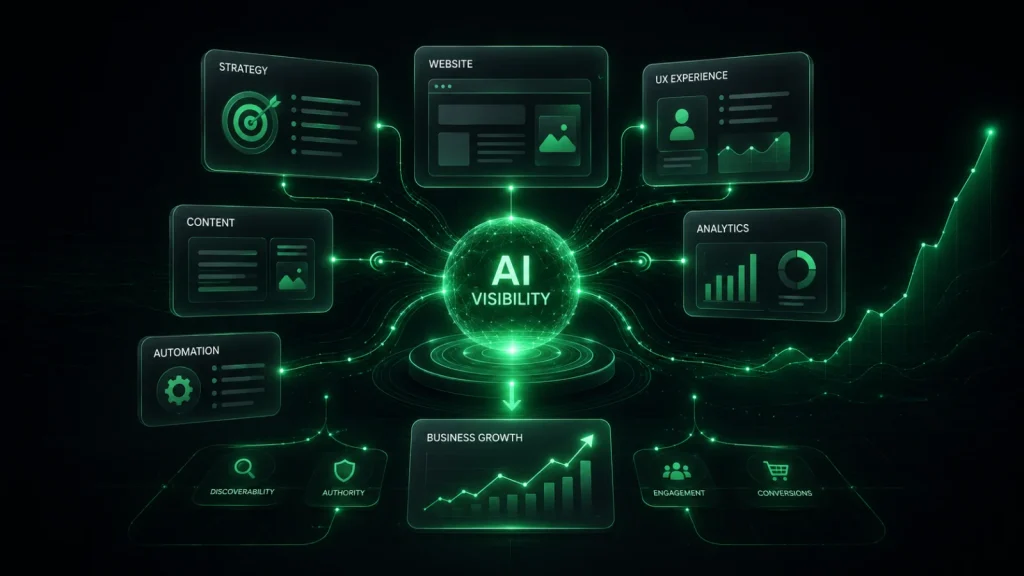
Recommended internal links

Frequently Asked Questions
What is Google AI Mode?
Google AI Mode is an AI-powered search experience that allows users to ask complex questions and receive AI-generated responses with useful web links and follow-up exploration.
Is SEO still important in the age of AI Search?
Yes. SEO is still important, but it needs to evolve. Technical SEO, content quality, website structure and authority now need to work together with GEO and AI Search optimization.
What is GEO in digital marketing?
GEO stands for Generative Engine Optimization. It is the process of preparing website content and digital assets so they can be understood, trusted and potentially referenced by AI-powered search systems.
Can a business guarantee visibility in Google AI Mode or ChatGPT?
No. No agency can honestly guarantee visibility in AI-generated answers. However, businesses can increase their chances by improving content quality, technical SEO, structure, authority and topical depth.
How should a business start preparing for AI Search?
The best first step is a full digital audit covering the website, SEO, content, analytics, internal linking, service pages, technical performance and AI Search readiness.
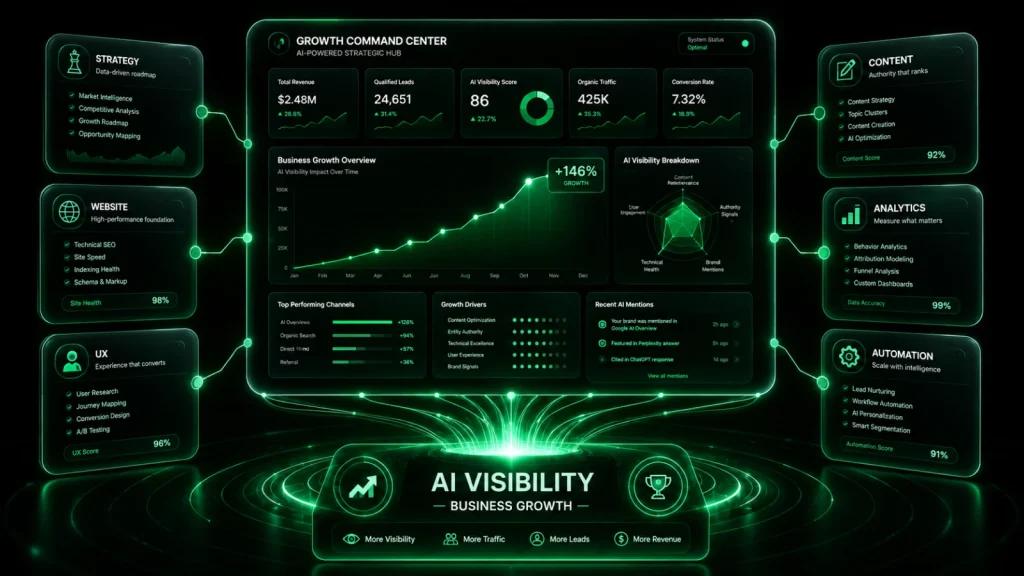
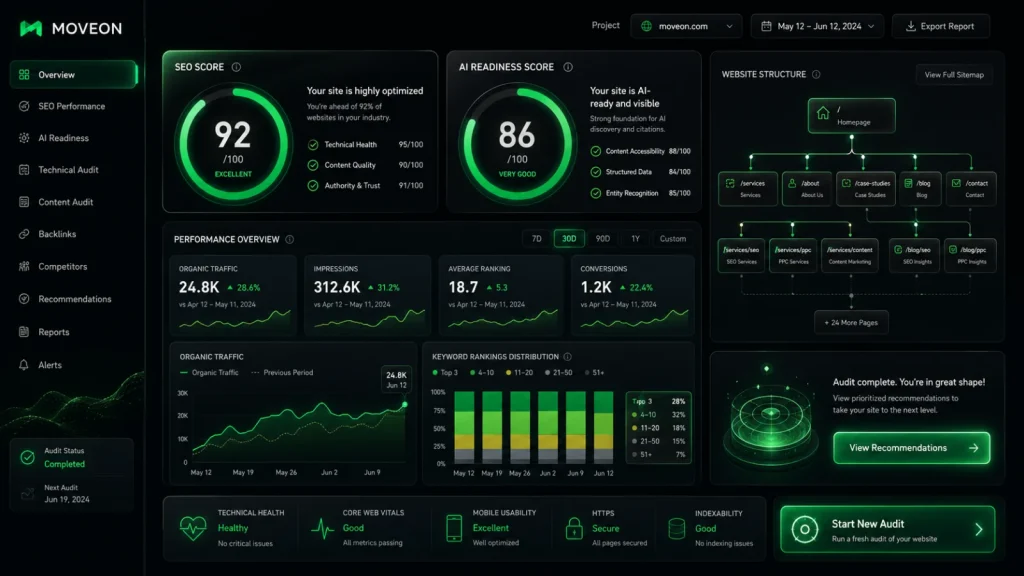
Want to know if your website is ready for AI Search, Google AI Mode, and the new era of SEO? MOVEON can audit your digital system and show where your business is losing visibility, trust, and leads.